

Which site would you like to visit?
By clicking the retail or wholesale site button and/or using rarewineco.com you are choosing to accept our use of cookies to provide you the best possible web experience.


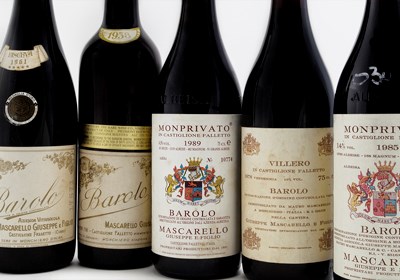
With the world increasingly enchanted by the magic of classical Barolo, the Giuseppe Mascarello estate’s Barolo Monprivato has emerged as one of the region’s crown jewels.
Such acclaim is long overdue for a winemaker whose track record dates back more than six decades. But it was also inevitable: now that Giovanni Conterno, Bartolo Mascarello, and Beppe Rinaldi are gone, he is the last of his generation of great, classically inspired Barolo winemakers.
Like his fellow icons, Mauro is a traditionalist dedicated to long fermentations and aging in old botti grandi. But he has also made important changes, not the least of which was the creation of the first single-vineyard Barolo in 1970 from the mythic Monprivato vineyard. Prior to that year, his family had always made their towering Barolos and Barolo Riservas by blending Monprivato fruit with grapes from other sites.
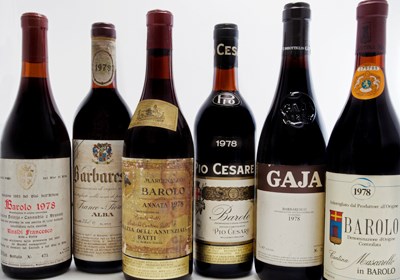
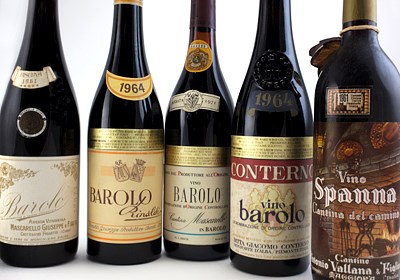
The multi-vineyard Mascarello Barolos of the 1950s and 1960s were among the great wines of their era. Yet, as remarkable as they were—and remain today if well-cellared—Mauro recognized that Monprivato on its own could produce an even more compelling wine, prodigious in its perfume and abundant in its complexity.
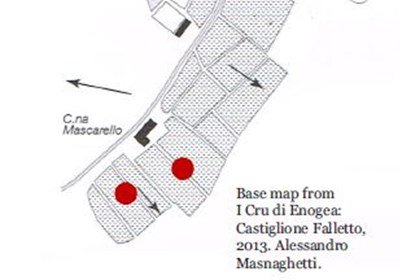
Since its first vintage in 1970, Mauro’s Barolo Monprivato has been one of the Langhe’s most consistently magical wines. The secret to its greatness can be found not only in Mauro’s winemaking but in a very special terroir. Approximately 15 acres in size on a southwest-facing slope in Castiglione Falletto, Monprivato’s white and gray marl soils offer textbook conditions for Nebbiolo.
Monprivato has been known as a special vineyard since at least the 1600s, and a quarter century ago Renato Ratti’s epic classification of Barolo vineyards ranked Monprivato among Barolo’s ten greatest vineyards, analogous to a Burgundy grand cru. And in the 1980s, Mauro purchased all but a tiny sliver of the site, effectively making it one of only a handful of great Barolo vineyards to be entirely owned by a single estate.
In 1983, having made several great Barolos from Monprivato, Mauro began replanting a two-acre section of the vineyard, using a Nebbiolo clone originally planted in Monprivato in 1921 by his grandfather, Morissio. Mauro theorized that this clone—of the Michét subvariety—had become uniquely adapted to the Monprivato terroir. Mauro’s goal was to produce a super-riserva Barolo called Cà d’Morissio.
Mauro’s first two Cà d’Morissios, the 1993 and 1995, showed great promise but it was the profound 1996 and 1997 that really put this cuvée on the map. Today, Cà d’Morissio stands next to Conterno’s Monfortino and Giacosa’s red label riservas as one of the Langhe’s most epic and sought-after wines.
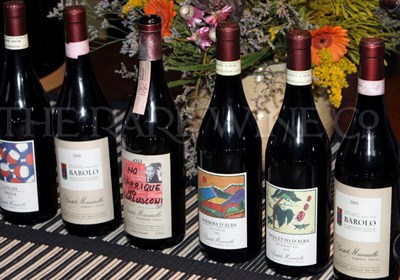
In addition to Monprivato and Cà d’Morissio, Mauro makes small quantities of arguably the finest Barolos in the Perno (from the Santo Stefano sub-zone) and Villero crus. He also makes vineyard-designated Dolcettos, Barberas, and Freisas that are as subtle and deep as his Barolos.
While much has been written about Mauro and Monprivato, that acclaim often overshadows the demanding viticulture that is a bedrock of this estate’s success. From the beginning, Mauro recognized that his fascination with terroir would be meaningless if the vineyards weren’t farmed in a way to capture their fullest potential. He shunned the artificial fertilizers being pushed on 1970s farmers, and he pruned his vines sharply to limit yields and concentrate fruit.
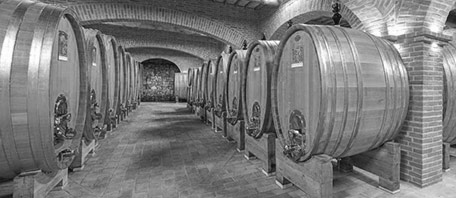
The estate is equally diligent in the cellar, carefully sorting its fruit and employing time-honored long macerations with the ancient cappello sommerso (submerged cap) method for its Barolos. Decades-old botti are still carefully maintained and used for long, traditional aging.
Today, Mauro is beginning to pass over control of the estate to his children, Elena and Giuseppe, just as he took the reins from his father a generation earlier. While part of a younger generation, Elena and Giuseppe have embraced their father’s classical winemaking.
Their promise is to uphold their family’s legacy as one of the reference points for not only Piedmont wine, but for all Italian wine.
 Event
Event
 Event
Event
 Event
Event
 Event
Event
 Event
Event
 Article
 Article
 Article
 Article
 Article
 Article
 Article
 Article
New discoveries, rare bottles of extraordinary provenance, limited time offers delivered to your inbox weekly. Be the first to know.
Please Wait
Adding to Cart.
...Loading...
By clicking the retail or wholesale site button and/or using rarewineco.com you are choosing to accept our use of cookies to provide you the best possible web experience.